
You may keep 5-gallon water jugs for everyday drinking, office use, emergencies, or backup water supplies. The challenge usually starts when several large bottles begin taking over your kitchen, pantry, garage, or break room.
The good news is that you do not need a large storage area. You just need to keep each jug clean, sealed, protected from heat and sunlight, and supported in a stable position. A suitable water bottle rack can also help you use vertical space instead of spreading heavy bottles across the floor.
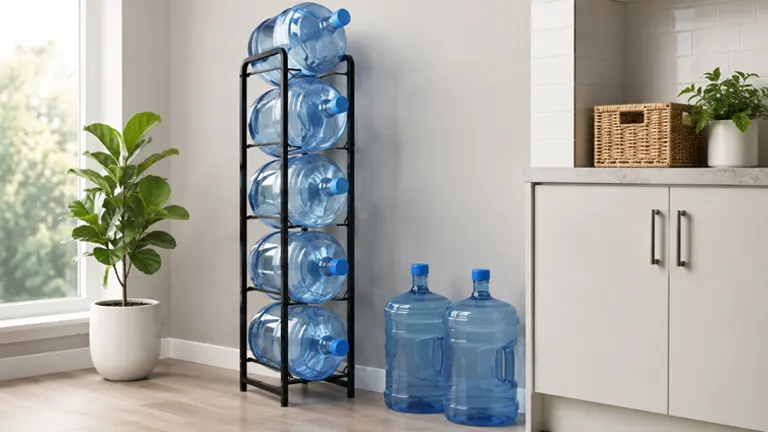
This guide shows you how to store 5-gallon water jugs safely, organize them efficiently, and choose a storage method that fits your space.
Key Takeaways
- Keep your water jugs in a cool, shaded, and clean location.
- Protect stored water from direct sunlight, excessive heat, and nearby chemicals.
- Check every cap, seal, handle, and bottle for damage before storage.
- Store bottles upright unless they are designed for horizontal rack storage.
- Use a purpose-built water bottle rack when you need to organize several jugs.
- Label refillable containers with the filling or storage date.
- Rotate your supply so you use older water before newer water.
- Clean and sanitize refillable containers before filling them again.
- Do not reuse containers that previously held fuel, pesticides, bleach, or other toxic materials.
What Is the Best Way to Store 5-Gallon Water Jugs?
The best way to store 5-gallon water jugs is to keep them sealed in a cool, dry place away from direct sunlight and harmful chemicals. You should place them on a stable surface or in a rack designed for large water bottles.
For several bottles, a vertical or horizontal water jug storage rack is usually the most practical option. It keeps the bottles organized, reduces floor clutter, and makes it easier for you to count and rotate your supply.
The right arrangement depends on your available space:
| Your Situation | Recommended Storage Method |
|---|---|
| One or two bottles | Upright on a clean, stable surface |
| Small kitchen or pantry | Narrow vertical bottle rack |
| Office break room | Multi-tier water bottle rack |
| Garage or storage room | Heavy-duty horizontal rack |
| Bottles that need frequent movement | Rolling water bottle rack |
| Emergency supply | Labeled bottles organized by storage date |
Why Proper Water Jug Storage Matters
A 5-gallon jug becomes heavy and difficult to control when it is full. If you place it on an uneven surface or stack it without proper support, it can roll, fall, leak, or damage nearby items.
Storage conditions also affect the cleanliness of your water supply. The CDC recommends keeping stored water in a cool location, away from direct sunlight and substances such as gasoline and pesticides. Containers should have secure covers and should not have previously held toxic chemicals.
Proper storage helps you:
- Keep your drinking area organized
- Reduce the risk of bottles tipping over
- Protect caps and bottle necks from damage
- Find older bottles before opening newer ones
- Keep dust and dirt away from dispensing areas
- Make better use of limited floor space
- Maintain a more professional office or commercial water station
How to Store 5-Gallon Water Jugs Step by Step
1. Inspect Every Water Jug
Before you put a jug into storage, take a few seconds to inspect it.
Look for:
- Cracks in the bottle body
- Loose or damaged caps
- Leaking seals
- Dented bottle necks
- Broken handles
- Cloudiness, residue, or unusual odors
- Dirt around the opening
Do not store a damaged jug and assume it will remain safe. A small crack can grow when the bottle is moved or placed under pressure.
Pay particular attention to the neck and cap. These areas may contact a water pump, dispenser valve, or water cooler, so they should stay clean and protected.
2. Clean Refillable Containers Before Use
You do not normally need to open and clean a commercially sealed bottle before storing it. However, reusable or self-filled water containers should be cleaned and sanitized before you refill them.
The CDC recommends washing the container with soap and water, rinsing it completely, sanitizing all interior surfaces, and allowing it to air-dry before filling it with safe water. The container should then be closed with a tight lid.
A simple cleaning routine includes:
- Empty the container completely.
- Wash the interior with soap and clean water.
- Rinse until no soap remains.
- Sanitize the container according to recognized public health guidance.
- Allow it to air-dry.
- Refill it with safe drinking water.
- Close the cap securely.
- Mark the filling date.
Always follow the container manufacturer’s cleaning instructions, especially when the jug includes a faucet, valve, tube, seal, or removable cap.
3. Choose a Cool and Shaded Location
Your storage area should be cool, dry, clean, and protected from direct sunlight.
Good locations may include:
- A kitchen pantry
- A utility room
- A clean basement storage area
- An indoor supply room
- An office break room
- A shaded garage area with stable temperatures
Avoid placing water jugs:
- Next to a sunny window
- Beside a heater or boiler
- Near gasoline, paint, pesticides, or cleaning chemicals
- In an area that regularly floods
- On an unstable shelf
- Where vehicles or equipment may hit them
- In a place that is difficult to inspect
For self-filled emergency water, the CDC advises storing containers at approximately 50°F to 70°F, keeping them out of direct sunlight, and replacing the water every six months.
4. Keep the Bottles Stable
You should not leave full water jugs where they can roll or tip.
When storing a bottle upright, make sure the base sits completely flat. Keep enough space around the bottle so you can grip and move it without hitting nearby items.
When storing bottles horizontally, use a rack with curved or shaped supports that hold the bottle body securely. Do not simply place round water jugs on top of one another.
A purpose-built rack helps prevent:
- Rolling
- Accidental tipping
- Pressure on bottle caps
- Unstable stacking
- Bottles blocking walkways
- Damage during daily handling
5. Use Vertical Space
Five-gallon water bottles take up a surprising amount of floor space when you place them side by side. A vertical rack lets you store several bottles within a much smaller footprint.
For example, a narrow five-tier rack can hold five bottles while using approximately the floor area of one bottle. This arrangement works well in offices, pantries, kitchens, gyms, service centers, and small storage rooms.
Choose a rack based on:
- Number of bottles
- Bottle diameter
- Available floor area
- Ceiling height
- Required load capacity
- Stationary or mobile use
- Indoor or outdoor environment
Do not choose a rack based only on how many tiers it has. You also need to confirm that its dimensions and support structure match your bottle size.
Should You Store Water Jugs Upright or Horizontally?
You can store many 5-gallon water jugs either upright or horizontally, but the bottle design and sealing method matter.
Upright Storage
Upright storage is the simplest choice when you have only one or two bottles.
It helps:
- Keep pressure away from the cap
- Make leaks easier to notice
- Keep the bottle ready for a top-loading cooler
- Reduce contact between the bottle neck and surrounding surfaces
The disadvantage is that several upright bottles can use a large amount of floor space.
Horizontal Rack Storage
Horizontal storage works well when you use a rack designed for large bottled water containers.
It helps:
- Save floor space
- Organize several bottles
- Make inventory easier to see
- Keep bottles from rolling
- Create a neat office or commercial storage area
Before storing a jug horizontally, make sure its cap is secure and the bottle is compatible with that position. Place the neck where it will not be struck or pressed against the rack frame.
| Storage Position | Advantages | Points to Check |
|---|---|---|
| Upright | Simple, stable, easy to inspect | Requires more floor space |
| Horizontal rack | Space-saving and organized | Requires secure caps and proper supports |
| Angled stand | Makes gravity-fed dispensing easier | Must match the bottle and faucet |
| Stacked without a rack | No equipment required | Not recommended due to instability |
Can You Stack 5-Gallon Water Jugs?
You should not freely stack standard round 5-gallon jugs unless the bottle design specifically supports stacking.
Most water cooler bottles have curved shoulders and narrow necks. One bottle cannot sit securely on another without a supporting structure. Even when the bottles appear stable, a small impact can cause them to slide or fall.
A water bottle rack is safer because each bottle has its own support level. The rack transfers the load through its frame instead of placing the weight directly on another bottle.
When selecting a rack, verify:
- Bottle capacity
- Frame material
- Maximum load
- Number of tiers
- Anti-slip supports
- Assembly method
- Floor stability
- Caster locks, when wheels are included
Water Jug Storage Ideas for Different Spaces
Kitchen and Pantry Storage
You probably want your kitchen storage to remain clean and visually organized.
A narrow vertical rack works well beside a refrigerator, cabinet, or pantry wall. Keep the rack away from the cooking area so grease, steam, and heat do not collect around the bottles.
You can also keep one bottle near your dispensing area and place the remaining supply in a nearby storage rack.
Office Water Jug Storage
An office may use several bottles each week, so accessibility and rotation matter.
Place the rack in a break room, supply room, or designated water area. Avoid blocking emergency exits, walkways, cabinets, or cleaning access.
You can organize bottles into two groups:
- Full bottles waiting for use
- Empty bottles waiting for collection or refilling
This simple separation prevents confusion and keeps the drinking area more professional.
Garage Storage
A garage may seem convenient, but temperature and chemical exposure can create problems.
Do not store water next to:
- Fuel
- Motor oil
- Paint
- Pesticides
- Solvents
- Cleaning chemicals
- Vehicle exhaust areas
Choose an interior wall away from direct sunlight. If your garage becomes extremely hot or cold, an indoor storage area may be more suitable.
Basement Storage
A clean, dry basement can provide stable temperatures and plenty of space.
Keep bottles away from:
- Flood-prone floors
- Moldy walls
- Drain backups
- Furnaces
- Chemical storage
- Areas with pest activity
A raised rack can make inspection and cleaning easier, but it must be rated for the weight of full bottles.
Emergency Water Storage
Five-gallon jugs can form part of your household emergency water supply. Ready.gov recommends storing at least one gallon per person per day for several days, covering drinking and sanitation needs.
This table gives you a simple planning estimate:
| Number of People | Water Needed Per Day | 5-Gallon Jugs for 3 Days |
|---|---|---|
| 1 person | 1 gallon | 1 jug |
| 2 people | 2 gallons | 2 jugs |
| 4 people | 4 gallons | 3 jugs |
| 6 people | 6 gallons | 4 jugs |
Round up rather than down, especially if you live in a hot climate, have pets, or need additional water for medical or sanitation purposes.
How to Organize and Rotate Stored Water
You do not want older bottles to stay at the back of the rack indefinitely.
Use a simple first-in, first-out system:
- Mark the storage or purchase date.
- Place newer bottles behind or below the current supply.
- Use the oldest suitable bottle first.
- Check caps and seals during every rotation.
- Remove damaged bottles immediately.
- Clean the rack before returning new bottles.
For self-filled water, label each container as drinking water and add the storage date. CDC guidance recommends replacing self-filled stored water every six months. For commercially bottled water, follow the label and manufacturer’s storage information.
You can keep a small inventory card near the rack:
| Bottle Position | Date Stored | Condition | Status |
|---|---|---|---|
| Tier 1 | Month/Day | Seal intact | Ready to use |
| Tier 2 | Month/Day | Seal intact | Reserve |
| Tier 3 | Month/Day | Check cap | Inspect |
| Tier 4 | Month/Day | Empty | Return or refill |
How to Store an Open 5-Gallon Water Jug
Once you open a bottle, keep the neck, cap area, pump, and dispensing parts clean.
Use a fitted water pump, valve, or compatible dispenser instead of repeatedly dipping cups or utensils into the jug. The CDC advises avoiding hand contact with the stored water and using a clean device whenever water must be removed from a container.
Follow these habits:
- Keep the bottle opening covered.
- Do not touch the inside of the neck.
- Clean the pump or valve according to its instructions.
- Keep dispensing tubes away from dirty surfaces.
- Do not return unused water to the bottle.
- Replace damaged seals and fittings.
- Keep the opened bottle in a clean indoor area.
- Use the water within the supplier’s recommended period.
How to Choose a 5-Gallon Water Bottle Rack
The best rack is not always the one that holds the most bottles. It is the one that fits your bottles, floor area, handling needs, and storage environment.
Capacity
Choose the number of tiers based on how many full bottles you normally keep.
Common options include:
- 2-bottle racks
- 3-bottle racks
- 4-bottle racks
- 5-bottle vertical racks
- Double-row high-capacity racks
- Mobile racks with wheels
Frame Construction
A strong metal frame is suitable for offices, warehouses, kitchens, and commercial environments. Check the tubing, joints, surface finish, and total load rating.
Bottle Support
The support should hold the bottle body without pressing sharply against the plastic. Curved rails or shaped cradles help keep round bottles stable.
Floor Protection
Look for stable feet, anti-slip pads, or locking casters. A tall rack should remain steady when you remove a bottle from an upper tier.
Assembly and Cleaning
A detachable rack may be easier to ship and store. A welded rack may offer a simpler permanent structure. In either case, you should be able to clean around and beneath it.
Common Water Jug Storage Mistakes
Storing Bottles in Direct Sunlight
Sunlight can heat the bottles and expose them to repeated temperature changes. Choose a shaded indoor space instead. Public health guidance also recommends keeping stored water away from direct sunlight.
Keeping Water Near Chemicals
Do not store drinking water next to gasoline, pesticides, solvents, or other toxic products. Keep a separate area for drinking water.
Reusing the Wrong Container
Never use a container that previously held toxic chemicals. Washing it does not guarantee that all residues are gone.
Stacking Bottles Without Support
Round bottles can roll or slide. Use a rack rather than building an unstable bottle pile.
Ignoring the Cap
A bottle may look fine while the seal is damaged. Inspect the cap, neck, and closure before placing it into long-term storage.
Forgetting to Rotate Your Supply
Without dates and a clear order, older water can remain unused. Label your containers and use the oldest suitable supply first.
Overloading a Shelf
A normal household shelf may not support several full 5-gallon jugs. Check its rated capacity or use a dedicated bottle rack.
Mixing Full and Empty Bottles
You may lose track of your inventory when full and empty bottles look similar. Keep them in separate areas.
Conclusion
You can store 5-gallon water jugs safely without turning your kitchen, office, or storage room into a cluttered bottle area. Start with clean, sealed containers. Keep them in a cool and shaded place, inspect the caps regularly, label refillable water, and rotate your supply.
When you have several bottles, a dedicated water bottle rack gives you a safer and more space-efficient arrangement than placing the jugs around the floor or stacking them without support.
At SHAFON, we supply water bottle racks, 5-gallon water bottles, portable water containers, dispensing products, caps, valves, and matching accessories for home, office, outdoor, and commercial water applications. We can help you match rack capacity, bottle size, packaging, and product combinations for wholesale, distribution, retail, or private-label projects.
Frequently Asked Questions
How long can you store water in 5-gallon jugs?
For self-filled containers, the CDC recommends replacing the stored water every six months. Commercially bottled water should be stored according to the supplier’s instructions and label information.
Where should you store 5-gallon water jugs?
Keep them in a cool, clean, shaded location away from direct sunlight, extreme temperatures, chemicals, and areas at risk of flooding or impact.
Can you store 5-gallon water jugs on their side?
You can store compatible bottles horizontally in a purpose-built rack when the caps are secure. Check the bottle supplier’s guidance because not every closure is intended for side storage.
Is it safe to stack 5-gallon water bottles?
Do not stack standard round bottles without a suitable rack or supporting system. Their curved shapes can make the stack unstable.
Should water jugs be stored off the floor?
Keeping them on a rack can improve organization, inspection, and cleaning. The most important requirement is that the bottles remain stable, clean, undamaged, and protected from contamination.
Can you keep 5-gallon water jugs in a garage?
You can use a garage only when the area stays reasonably cool and the bottles are protected from sunlight, vehicle impact, fuel, pesticides, paint, and other chemicals.
How many 5-gallon jugs should you keep for emergencies?
Ready.gov recommends at least one gallon per person per day for several days. One 5-gallon jug therefore covers approximately five person-days under that planning guideline. Store additional water for pets, hot conditions, medical needs, and longer disruptions.
How do you keep stored water jugs clean?
Keep the caps closed, avoid touching the bottle openings, clean refillable containers before use, sanitize them when appropriate, and clean pumps, faucets, tubes, and valves regularly.